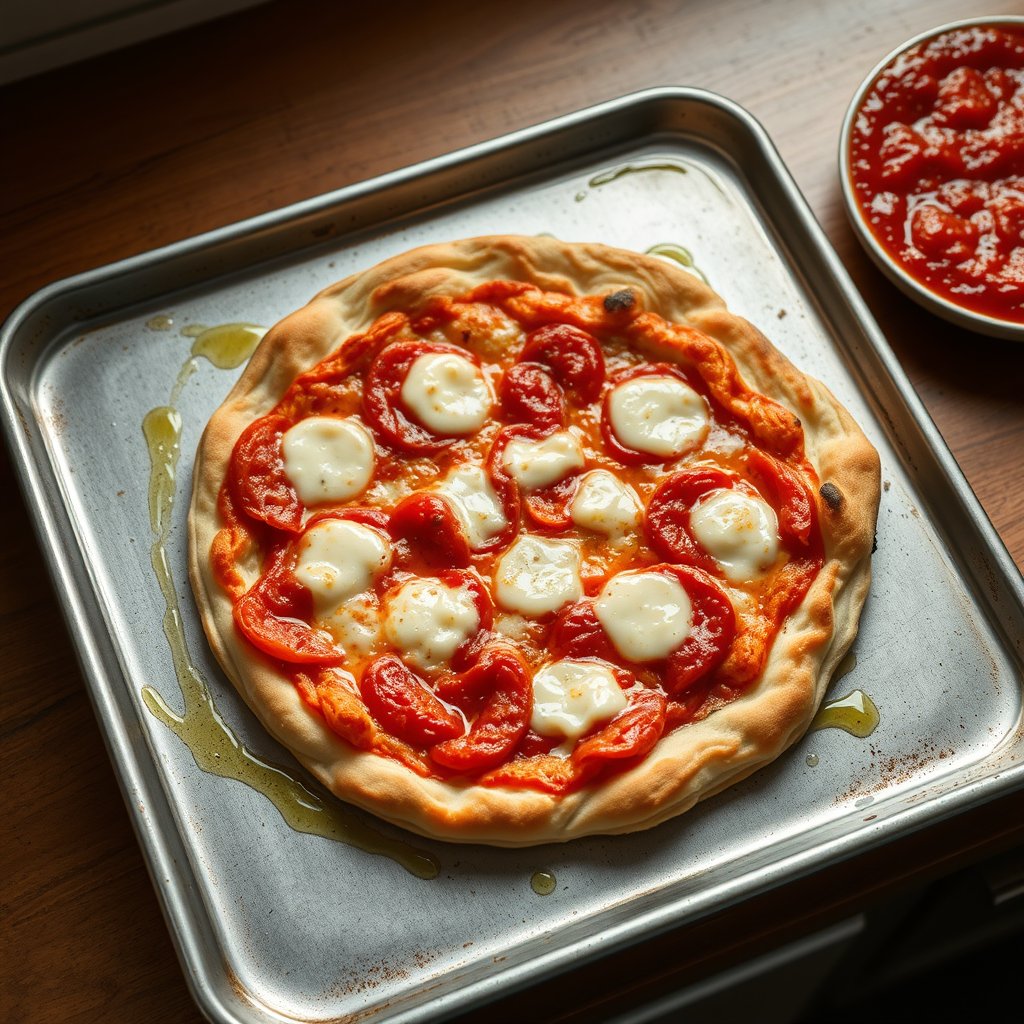
King Arthur Baking crowned its 2026 Recipe of the Year on January 2, and for the first time in the program's 13-year run it isn't a loaf or a pastry — it's a pizza. Specifically, a Flaky Puff Crust Pizza: a half-sheet-pan pie whose crust is laminated with cold butter so it bakes up in crackly, croissant-like layers instead of the usual chewy round. The test kitchen landed on it after simultaneously working on sheet-pan pizzas, a croissant sourdough, and biscuits, and the mash-up of those three ideas is exactly what makes this recipe unusual.
Here's the fun part for anyone who keeps a jar of bubbling culture on the counter: King Arthur's official version is deliberately a same-day, yeast-driven recipe with no fermentation planning required. That leaves a wide-open door. A sourdough take on the 2026 Recipe of the Year is a genuinely fresh angle — King Arthur already published a sourdough spin on last year's focaccia, but nobody's handed you a laminated sourdough pizza yet. So let's build one.
What King Arthur's 2026 Recipe of the Year Actually Is
The headline technique is lamination — the same butter-and-fold method behind croissants — applied to pizza dough in a streamlined way. You roll the dough out, scatter frozen grated butter across it, fold it letter-style, add more butter, fold again, then roll it out one last time to fit the pan. As King Arthur explains it, this "results in layers of cold butter separated by layers of dough," and when the pizza hits a hot oven "the water in the butter creates steam, producing pockets of air." That steam is what puffs the crust into flaky sheets.
A few specifics from the official recipe worth grounding your expectations in:
- It's a half-sheet pizza, roughly 13" x 18", yielding twelve generous slices — enough for four to six people.
- No baking steel or stone required. The whole point was a crisp-bottomed pizza that doesn't demand special gear, which is a big part of why it was chosen as an approachable Recipe of the Year.
- Start to finish is about two hours in the original: a 30-minute rise, the butter lamination and rolling, another 30-minute rise, then topping and a roughly 15-minute bake.
You can read King Arthur's own announcement, "The best pizza is flaky pizza," for the full backstory and the base recipe. What follows here is an adaptation — the sourdough parts below are my own spin, not King Arthur's official method, so treat their recipe as the source of truth for the classic version.
As an Amazon Associate we earn from qualifying purchases. The gear links below go to tools I'd recommend for this bake regardless.
Why a Sourdough Version Makes Sense
Lamination and long fermentation are natural partners. A laminated dough is all about texture and richness; sourdough adds the one thing a two-hour yeasted dough can't fully deliver — flavor depth from a slow ferment. A cold overnight rest in the fridge lets the dough develop that tangy, wheaty complexity while also relaxing the gluten, which makes the final roll-out easier and the crust more tender.
There's a practical bonus too. Keeping butter cold is the single hardest part of laminating any dough. A cold-fermented sourdough comes out of the fridge already chilled, so the grated butter has a fighting chance of staying in distinct layers instead of melting into the dough. Cold dough plus frozen butter is the whole game.
If you're sitting on a tub of leftover starter and wondering what to do with it, this is a great use. Our sourdough discard guide walks through how discard behaves in enriched and laminated doughs versus a straight loaf, and the short version is that discard works beautifully here because you're not relying on it for all the lift.
Two Ways to Adapt It: Active Starter vs. Discard
There are two honest paths, and they serve different goals.
Path 1: Active starter for flavor and lift. Use a ripe, recently fed starter and let it do some of the leavening work alongside a small amount of commercial yeast. Sourdough alone can raise this dough, but because lamination adds fat and the timeline is finicky, a pinch of yeast as insurance keeps things predictable — especially your first time. Swap roughly a cup of ripe 100%-hydration starter into the dough, then hold back a little of the recipe's flour and water to keep the overall hydration in the same neighborhood. Expect to add fermentation time; sourdough moves slower than packet yeast.
Path 2: Discard for flavor only. If you just want the tangy character without re-engineering the leavening, stir in half a cup to a cup of unfed discard and keep the original yeast amount and timing more or less intact. This is the low-risk version and the one I'd point a first-timer toward. You get most of the flavor payoff with almost none of the schedule juggling. The discard essentially acts as a flavor booster and a bit of extra hydration.
Either way, a kitchen scale is non-negotiable once you start moving starter in and adjusting flour and water to compensate. Baker's percentages only work if you're weighing, and you'll be tweaking hydration to keep the dough rollable. A good digital kitchen scale that reads in grams is the cheapest upgrade you'll make to this whole project.
The Adapted Method, Step by Step
Here's how I'd run a laminated sourdough version. Use King Arthur's official ingredient quantities as your baseline and layer these changes on top.
1. Build the dough with starter. Mix your flour, water, salt, olive oil, and a small amount of yeast as usual, but fold in ripe starter (Path 1) or discard (Path 2). Mix just until it comes together and shows some strength. The flour you choose matters more than usual here because you want structure to hold those laminated layers — a higher-protein bread flour gives you the backbone. Our rundown of the best bread flour for sourdough covers which brands hit the protein sweet spot, and it applies directly to this dough.
2. Cold-ferment overnight. Instead of a 30-minute rise, cover the dough and refrigerate it for 8 to 24 hours. This is where the flavor comes from, and it doubles as your make-ahead step. Mix Saturday night, bake Sunday.
3. Grate and freeze your butter now. Grate cold butter on the large holes of a box grater, spread it on a plate, and freeze it while the dough is chilling. You want it rock-hard and shattery, not soft.
4. Laminate cold. Pull the dough straight from the fridge onto a lightly floured surface. Roll it into a rectangle, scatter half the frozen butter across two-thirds of it, fold letter-style, rotate, scatter the rest of the butter, and fold again. Work fast and keep everything cold. If the butter starts to smear, stop and chill the whole thing for 15 minutes before continuing. Semolina is your friend for keeping the dough from sticking without gumming it up — a bag of semolina flour for pizza is worth having on hand for the roll-out and the pan.
5. Roll to fit the pan and proof. Roll the laminated dough to fit a half sheet, transfer it in, and give it a second rise. With sourdough in the mix this will take longer than the original 30 minutes — let dough feel and puffiness guide you rather than the clock. A sturdy, heavy-gauge sheet pan for pizza matters here; thin pans warp and scorch, and you want even heat under all that butter.
6. Top and bake hot. Dress it simply — sauce, cheese, a restrained hand — because a flaky crust this rich doesn't want to be buried. A good finishing drizzle of extra virgin olive oil before and after baking is the classic King Arthur touch and it pairs perfectly with the buttery layers. Bake hot until the bottom is crisp and the top is bronzed.
Do You Actually Need a Pizza Steel?
King Arthur was explicit that this recipe does not require a baking steel or stone — that was a design goal, and the sheet pan does the job. So if you don't own one, don't let that stop you.
That said, if you bake pizza often and want maximum bottom crispness, a preheated pizza steel slid under the sheet pan gives you a blast of stored heat that helps set the crust fast. It's an optional upgrade, not a requirement, and the same thinking applies to sourdough gear generally — the tool earns its place only if it changes the bake. That's the exact lens we use in our roundup of the best Dutch ovens for sourdough: buy the thing that changes the bread, skip the thing that just looks the part.
Troubleshooting the Sourdough Twist
Butter melting into the dough. Your dough or your kitchen is too warm. Chill everything harder. This is the number-one lamination failure and cold sourdough actually helps you here.
Dough too slack to roll. Sourdough and discard add moisture. Hold back some water when mixing, and if it's still slack, a short chill firms it up. Weigh your additions so you can correct next time.
Not enough rise. Sourdough is slower, full stop. Give the second proof real time, and if you're nervous, keep that small yeast insurance in the recipe rather than going fully wild-yeast on your first attempt.
Not tangy enough. Push the cold ferment longer, toward 24 hours, and lean on Path 1 with an active starter rather than discard alone.
Why This Is a Great Entry Bake
For all its croissant-adjacent ambition, this recipe is forgiving in the ways that matter. There's no baking steel to buy, the pan does the work, and a pizza is inherently low-stakes — even a slightly imperfect laminated crust is still a delicious pizza. Adding sourdough on top gives beginner bakers a legitimate reason to finally use their discard on something more exciting than crackers, and the cold-ferment step turns a two-hour sprint into a relaxed overnight project you can start after dinner.
King Arthur picked this recipe precisely because it's impressive but approachable. Bolting a sourdough twist onto it keeps that spirit while handing sourdough bakers something the official version leaves on the table: real fermented flavor under all those buttery layers. Start your dough tonight, grate your butter, and give the 2026 Recipe of the Year the crumb treatment it deserves.
Frequently Asked Questions
What is King Arthur's 2026 Recipe of the Year?
Flaky Puff Crust Pizza, announced January 2, 2026. It's a half-sheet-pan pizza (about 13" x 18", twelve slices) whose crust is laminated with grated frozen butter so it bakes into flaky, croissant-like layers, and it requires no baking steel or stone.
Can I make it sourdough?
Yes, but that's an adaptation, not King Arthur's official recipe. You can add an active starter for flavor and some lift, or stir in discard purely for tangy flavor. A cold overnight ferment adds depth and, as a bonus, keeps the dough cold enough to laminate cleanly.
Should I use active starter or discard?
Discard is the low-risk option for flavor with minimal schedule changes, and it's what I'd suggest for a first attempt. An active starter adds both flavor and leavening but moves slower, so keep a little commercial yeast as insurance until you know your timing.
Do I need a pizza steel or stone?
No. King Arthur designed the recipe to work on a standard rimmed sheet pan without any stone or steel. A pizza steel is an optional upgrade for extra bottom crispness, not a requirement.
As an Amazon Associate we earn from qualifying purchases. This article contains affiliate links; if you buy through them we may earn a small commission at no additional cost to you.